Mar 26, 2026
By Silvia Milanova
Educating Women Worldwide Can Help Us All Face a Better Future
In honor of International Women’s Day and Women’s History Month in March, we are celebrating women everywhere—women of all races, classes, ages, statuses, occupations. They all deserve to be honored for what they do daily, for what they’ve accomplished historically and for what they’ll do in the future.
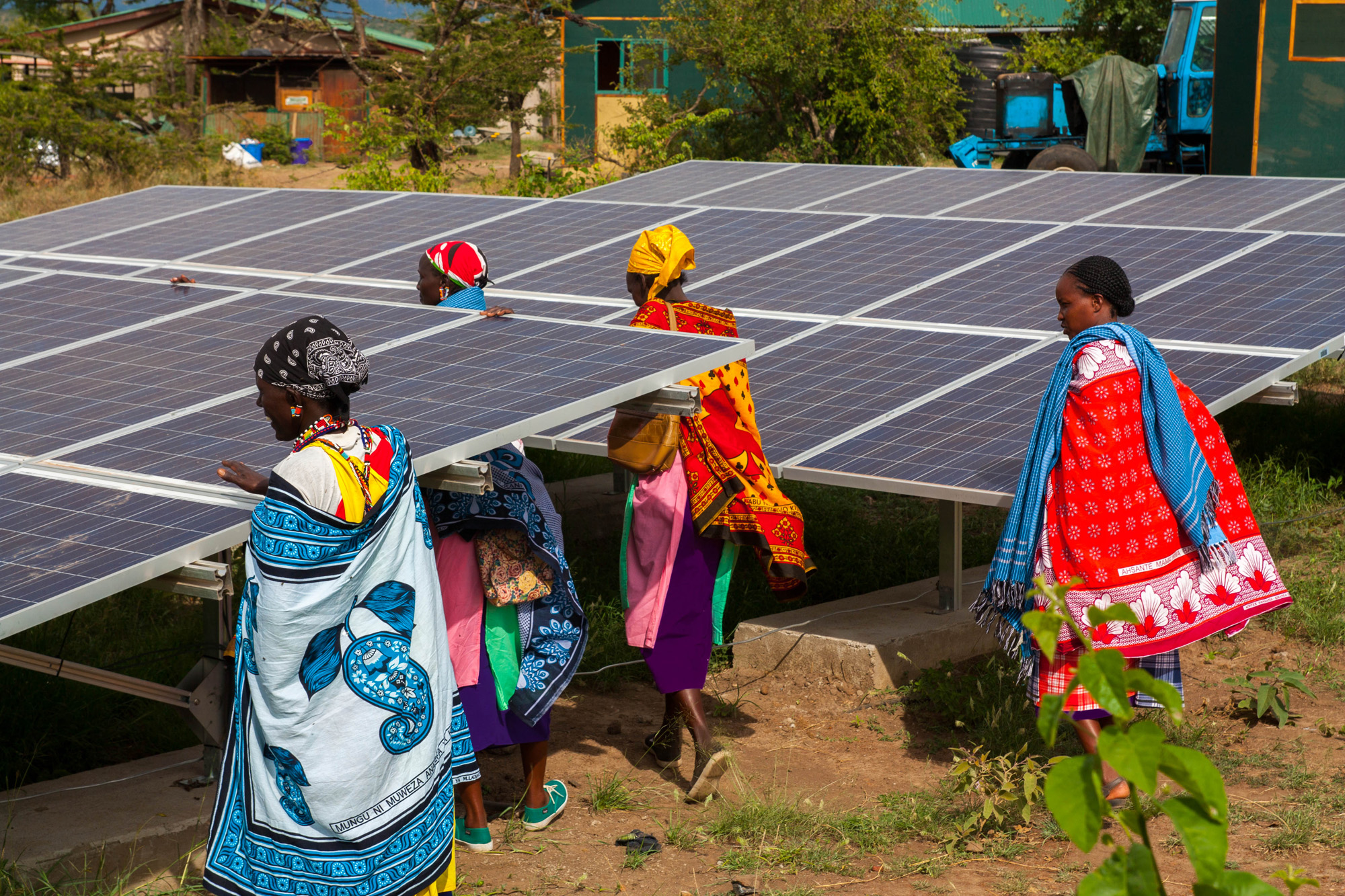
The theme for 2026, designated by The National Women's History Alliance is “Leading the Change: Women Shaping a Sustainable Future,” meant to celebrate “the contributions of women who are leading sustainability efforts across environmental, economic, educational and social justice movements.”
But for every successful, distinguished woman out there, there are many more women who aren’t receiving the support they need in order to achieve their goals. Currently, there are an estimated 132 million girls worldwide who are not in school. Research shows that educating females is one of the most powerful tools we have against climate change, specifically. Educating these females, especially past primary school, can have a dramatic impact on what our future looks like.
HOW DOES EDUCATION PLAY A ROLE?
Educate a girl, save the planet. Sounds simple, but it’s actually more complicated than we realize, especially in developing countries.
Project Drawdown, one of the world’s leading resources for information and insight about climate solutions, ranks Family Planning and Education as "Highly Recommended” as a climate solution that meets all of Project Drawdown’s criteria for global climate solutions. Educating one girl doesn’t just affect her own life; it also affects her entire family’s health, prosperity and future, and even that of her community.
As a girl gets older, she is more likely to drop out of school, especially in low- and middle-income countries (LMICs). According to the Malala Fund, this is due to many factors, not limited to:
- Poverty
- Gender Bias and Gender-Based Violence
- Conflict
- Inadequate Facilities
- Early marriage and pregnancy
- Climate Change
A report by Project Drawdown called Drawdown’s Health and Education Solution: The cascading benefits of access to universal education and voluntary family planning highlights that Health & Education is a unique solution to the climate crisis in that it directly cuts greenhouse gas emissions by advancing basic human rights. The report found that when we invest in education and health, achieving the UN Sustainable Development Goals (SDGs) will be more effective, cost less and take less time. In addition, providing the basic right to education can empower communities to participate in other climate solutions.
As a result, climate change can be minimized or even reversed, especially if these women go on to hold jobs in the sustainability sector or politics, where they can make vital decisions regarding climate change.
Girls’ education also correlates to a more stable family life, to more resilient societies, stronger economies and less inequality. Women with secondary education report a better psychological wellbeing, compared to those with fewer school years. This provides better opportunities, not just for other girls and women, but also for boys and men—a world with more fulfilling potential for everyone.
INFLUENTIAL FEMALES
There are women all over the world who are fiercely fighting for other women, gender equality and better education. And there are also women who are at the forefront of the climate crisis battle, implementing change and sustainability initiatives, and securing a more circular economy. Here are three women who stand out to us:
Malala Yousafzai– She founded the Malala Fund in 2013 with her sister, Ziauddin, to advocate for every girl’s right to 12 years of education. The fund’s mission is “to ensure all girls can access and complete 12 years of education. By completing 12 years of quality schooling, girls will have the knowledge, skills and confidence they need to reach their full potential, make their own life choices and engage meaningfully with the world around them.” They do this by gathering grants and securing resources to demand and uphold fairer rights—requiring governments and global institutions to implement the policies needed to materialize this. Their work has supported women in Afghanistan, Brazil, Ethiopia, Nigeria, Pakistan and Tanzania.
Graça Machel – A Mozambican politician and humanitarian, Machel is the only woman in modern history to have served as First Lady of two countries, South Africa and Mozambique. She was also married to former President of South Africa, Nelson Mandela, from 1998 until he died in 2013.
Machel is an impressive woman. Not only does she speak five languages in addition to her native Xitsonga language, she has also received many international accolades for her philanthropy and advocacy, especially for girls’ education and children’s rights. Some highlights include, the 1992 Africa Prize, awarded for her contribution to the goal of eliminating hunger in Africa by the year 2000, and the 1995 Nansen Medal from the United Nations, which recognized her enduring fight on behalf of refugee children. In 1997, she was also honored with the Dame Commander of the Order of the British Empire by Queen Elizabeth II for her services in the field of human rights protection.
Most importantly, Machel founded the Graça Machel Trust, which works “to ensure that women and girls are not only seen and heard — but are leading the transformation of Africa’s social, economic and political future.”
Nicole Rycroft – A former Australian physiotherapist and elite-level rower, Rycroft founded Canopy, a Vancouver-based nonprofit dedicated to protecting the world's forests, species, and climate while advancing Indigenous communities' rights. When she decided to pursue social justice work, Rycroft realized that in order to better protect the world’s Ancient and Endangered Forests, it would take more than physically blocking trees from being cut down. For her work to be more beneficial on a larger scale, she decided to instead collaborate with major companies and create a market for eco alternatives to the unsustainable products that originate from trees (such as packaging).
Through their dedicated work with more than 950 strategic partnerships, “Canopy is showing that we can transform global supply chains from ‘take, make, waste’ to create a circular, more sustainable future.”
So far, the nonprofit has been involved in securing large-scale conservation gains in 16.6 million hectares of Ancient and Endangered Forests in Indonesia, Canada’s Boreal Forest, and North America’s Temperate Rainforests. Their partners’ list is extensive and includes big name brands, such as Hugo Boss, Ben & Jerrys, H&M, Prana, as well as Amazon, IKEA, Sam’s Club, Target and Walmart. Through the partnership with Canopy, these companies have committed to:
- Not using Ancient and Endangered Forests in their packaging and textiles
- Speeding the uptake and development of innovative Next Gen Solutions
- Supporting big gains in forest conservation, in line with the global goal of Nature Needs Half
- Advocating for sustainable production and conservation
Unsurprisingly, Rycroft gave a TED talk in 2023.
HOW CAN WE HELP EMPOWER GIRLS AND WOMEN FOR A MORE SUSTAINABLE FUTURE?
Providing females with a proper and quality education is one of the most powerful investments any country in the world can make to curb climate change in its current trajectory. Women can help change and create a more stable world, and in turn help reshape the future for the better. In order to do that, we need to help girls and women thrive, both personally and professionally. Some solutions to close the learning gender gap include:
- Giving girls access to schools without barriers—without long trips, without fear of abuse, without the stigma that they’re not “allowed”.
- Supporting girls through pre-primary, primary and secondary education with adequate financial assistance (if needed) and equal opportunity for employment after school.
- Providing governments with the needed resources to create gender-responsive budgets and national education plans and policies that prioritize gender equality.
- Removing gender stereotypes and rethinking re-entry policies for young mothers.
These are just some examples of how nations can successfully support girls’ and women’s journeys to a quality education. There are many other, sometimes smaller, actions countries can implement. But one thing is clear; creating safe environments in schools and involving women in key decision-making within their communities improves not only their resilience and life outcomes, but also their climate mitigation actions and their overall fight to reduce the climate crisis and welcome a brighter future.